
How to Choose the Right GaN Charger
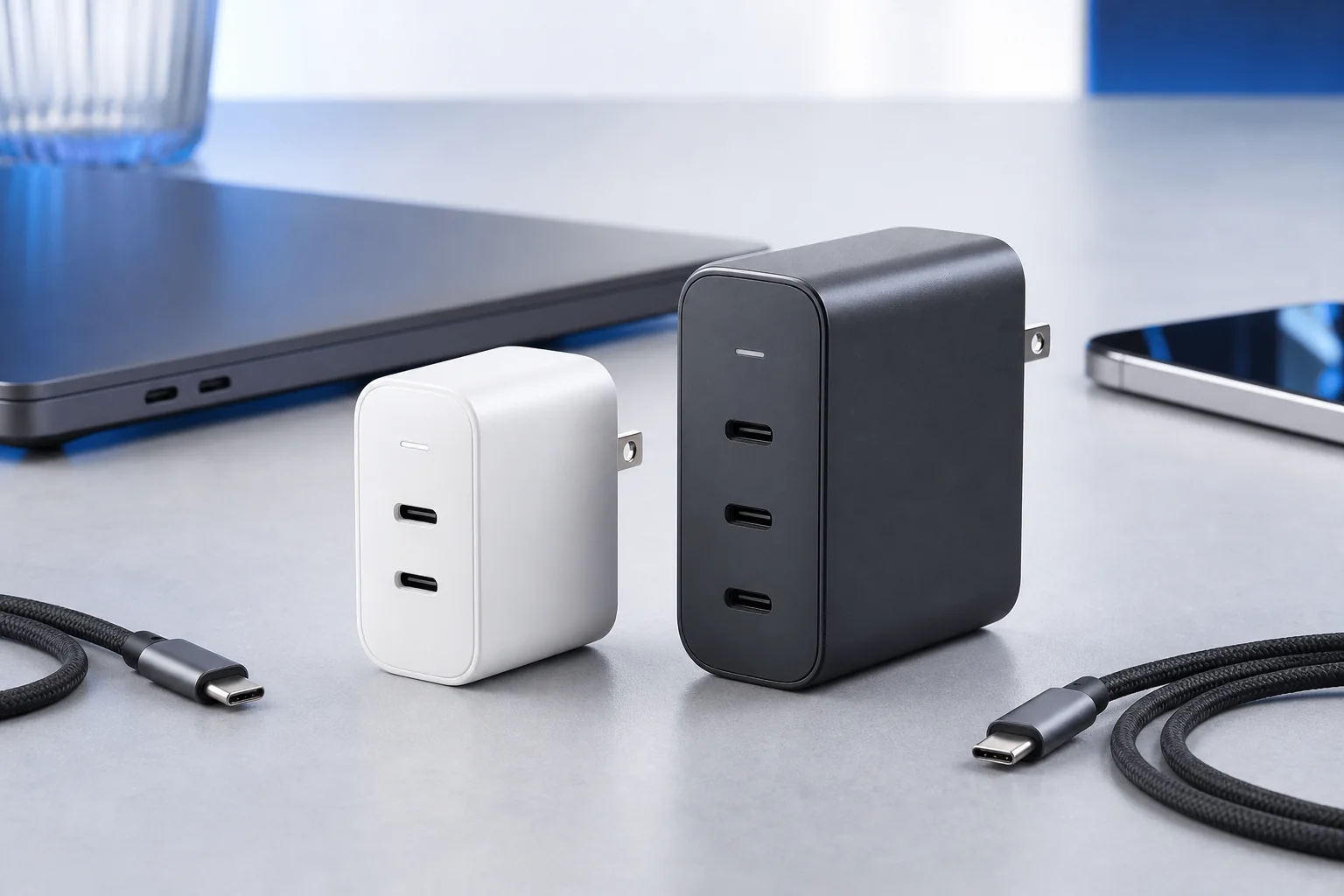
A compact charger is only useful when its ports, power profiles, and cables match the devices you actually carry. This guide explains the labels that matter.
Read guideClear signals. Better choices.
Research-backed electronics reviews, practical comparisons, and clear buying guides for the technology you use at home, at work, and everywhere in between.
We separate documented facts from judgment. If we have not used a product hands-on, we say so and base the guide on specifications, manuals, primary sources, and realistic use cases.
Our editorial approachField notes / 01–06
Six focused electronics reviews designed to answer the decision in front of you—not bury it under a long feature list.
A compact charger is only useful when its ports, power profiles, and cables match the devices you actually carry. This guide explains the labels that matter.
Read guideThe better wattage depends less on the number printed on the box and more on your laptop, simultaneous devices, cables, and travel priorities.
Read guideExisting wiring, rental restrictions, charging tolerance, and entryway conditions usually decide the right doorbell before camera specifications do.
Read guideA useful capacity estimate comes from watts, hours, and realistic conversion losses—not from choosing the largest battery that fits the budget.
Read guideThe better design depends on fit, carrying tolerance, call needs, climate, and how long you listen—not on noise cancellation alone.
Read guideNavigation, floor layout, maintenance access, and obstacle handling usually shape daily satisfaction more than a single suction claim.
Read guideA quieter way to review tech
Useful electronics reviews should make the trade-offs visible. Our process is deliberately simple enough for a reader to audit.
We begin with manufacturer documentation, standards bodies, official support pages, and clearly named sources. Specifications are treated as claims to verify, not decoration to copy.
A product earns its place by fitting a routine. We compare travel, home, work, maintenance, compatibility, privacy, and ownership constraints instead of chasing the biggest number.
There is rarely one best device for everyone. We describe who a choice fits, where it compromises, and what you should verify before spending money.
Electronics reviews often begin with a product and search for reasons to recommend it. We begin with the job. Does a charger remove adapters from a travel bag? Will a doorbell work with the wiring that is already in the wall? Can a robot vacuum cross the thresholds in a real home? Starting with the situation creates a more useful answer than ranking features in isolation.
We also distinguish capability from compatibility. USB-C is a connector, not a promise that every cable carries the same power. A smart-home feature is not useful if the network cannot reach the front door. A larger battery is not automatically a better backup if the inverter cannot start the intended load. Clear electronics reviews make those dependencies visible before they become returns or unused purchases.
Our guides do not use invented testing stories. When an article is based on published documentation and research, it is labeled and written that way. We cite primary sources where they clarify a standard, safety practice, or product behavior. If TechWorth Guide later performs hands-on work, the article will explain the equipment, conditions, and limits of that work instead of borrowing the language of a laboratory.
The result is a small editorial library built for practical decisions. You will find charging guides, smart home comparisons, personal audio advice, and maintenance questions that affect ownership after the first week. We would rather publish a focused guide that helps the right reader than a broad list that sends every visitor toward the same product.
What we cover
Three starting fields keep our electronics reviews useful without pretending to cover every device.
USB-C chargers, portable power, cables, and the compatibility details that determine whether a compact setup works when several devices are connected.
Connected devices considered as part of a home: installation, wireless coverage, privacy, maintenance, subscriptions, and the physical room around the product.
Audio and everyday accessories judged by fit, routine, repairability, portability, and how naturally they move between work and life.
Start with the decision


